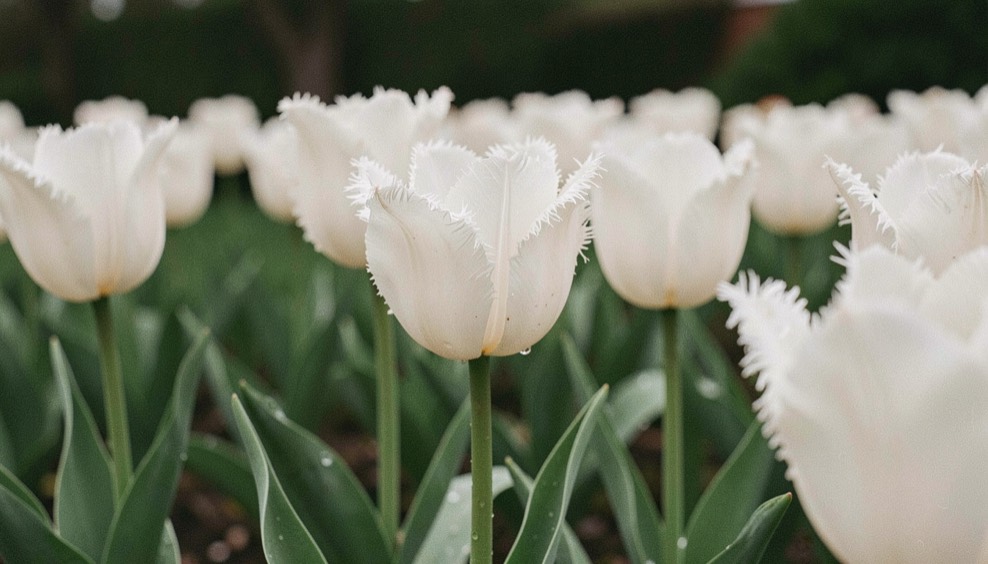
A fringed tulip adds a fine texture to the edge of a flower. The fringe is worth describing precisely because it changes what a close view reveals, while the garden decision still depends on stem, season and setting.
Edge before adjective
Look for how the fringe is distributed around the petal edge, whether it remains visible as the flower opens and how droplets or wind alter the outline. Words such as crystalline or feathered are descriptive choices, not measurements.
The Ledger uses a source phrase when one exists and avoids turning a photograph into proof of a registered trait.
Place texture where it can be seen
A fringed flower can disappear in a dense mass. Repeating a small number through a calmer planting gives the edge room, especially where morning or side light catches it.
Use the colour guide guide for contrast, and compare the lily-flowered form form to decide whether a different petal outline would make a better neighbour.
A named trial has limits
The RHS trial pages provide named observations and a defined context. They do not turn every garden into the trial site. The methodology keeps that distinction visible.
Send any correction through the contact desk; a source link is more useful than a general preference.
Continue the reading
Compare Lily-flowered form, colour guide and methodology.