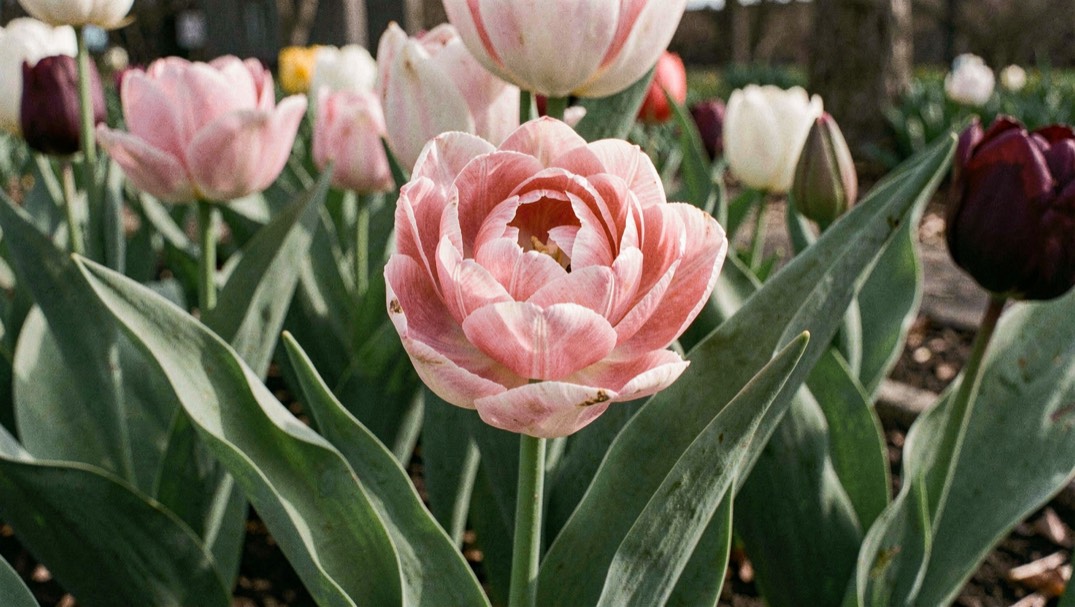
Double Late tulips bring a peony-like fullness to the end of the spring sequence. Their weight and scale make placement, shelter and the space between plants especially useful questions.
Fullness changes the frame
A double flower asks to be seen at close range, but several together can also form a strong block of colour. Leave enough air around the stems for the shape to remain legible and for wet petals to dry.
The group name describes form and season. It does not by itself tell a gardener how a cultivar will stand after rain.
Late is a planning tool
Use the season guide guide to place late doubles after early and mid-season groups. A low perennial or a quiet green backdrop can support the display while the leaves complete their work.
Compare Parrot tulips when the border needs a different kind of movement, and use garden planning for a complete layer sketch.
Named evidence, modest inference
The RHS trial material can support a statement about a named cultivar in a named trial. A garden-use tag derived from that observation remains editorial and is labelled as such.
Read the policy and methodology before treating a strong adjective as a fact.
Continue the reading
Compare Angelique record, Parrot forms and season guide.