A tulip bulb is a compact record of stored energy, but a quick inspection cannot predict every spring outcome. Look for sound tissue, a firm base and a planting plan that fits the material in hand.
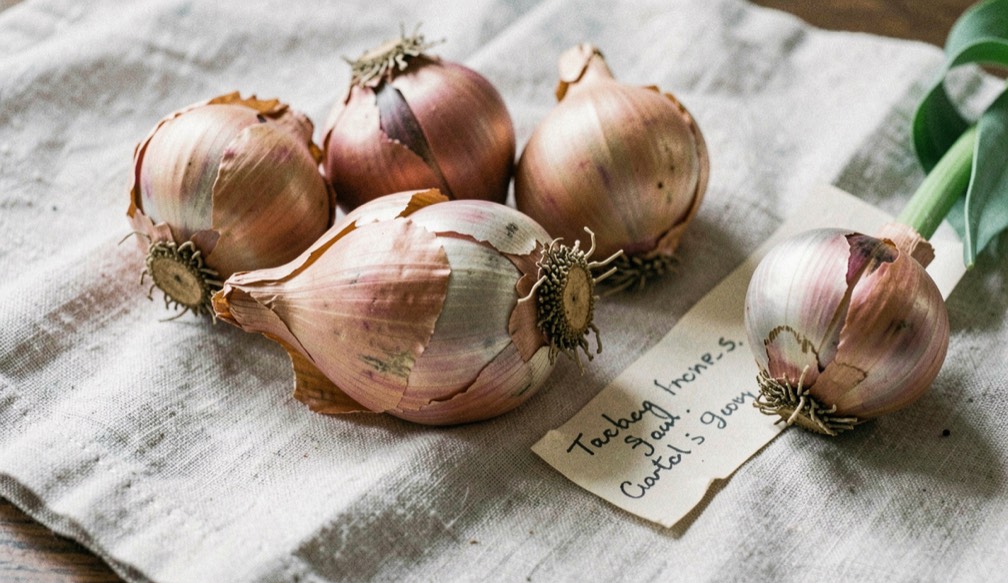
What to check
Choose bulbs that feel firm for their size, with a dry outer skin and no spreading soft patches. A small scrape is not the same as active rot, and a loose skin is not automatically a failure. Separate a clear warning from a harmless cosmetic mark.
The root plate at the base should be intact enough to support new roots. Do not peel a bulb just to make it look clean; the outer layers protect the stored material while it waits for planting.
Match the bulb to the setting
Large bulbs often give a stronger first display, but the planting depth, soil and post-flowering care still matter. In a container, the growing medium and drainage can be more important than the label on the packet.
Use planting guidance for the hole and the name index for the identity question. They are deliberately linked because a named bulb without a suitable site is not a complete planting decision.
Storage is not a blank cheque
If bulbs must wait, keep them dry, ventilated and away from fruit or heat sources. Commercial forcing protocols do not automatically transfer to a home garden. Note the source and the purpose of any temperature advice before applying it.
The methodology records those limits, and the correction desk is open to corrections when a source has been misread.
Continue the reading
Compare name index, planting and care guide.