Tulip care is mostly a matter of reading the plant at the right time. Foliage, water, shelter and the previous season all influence what a gardener sees after the flowers fade.
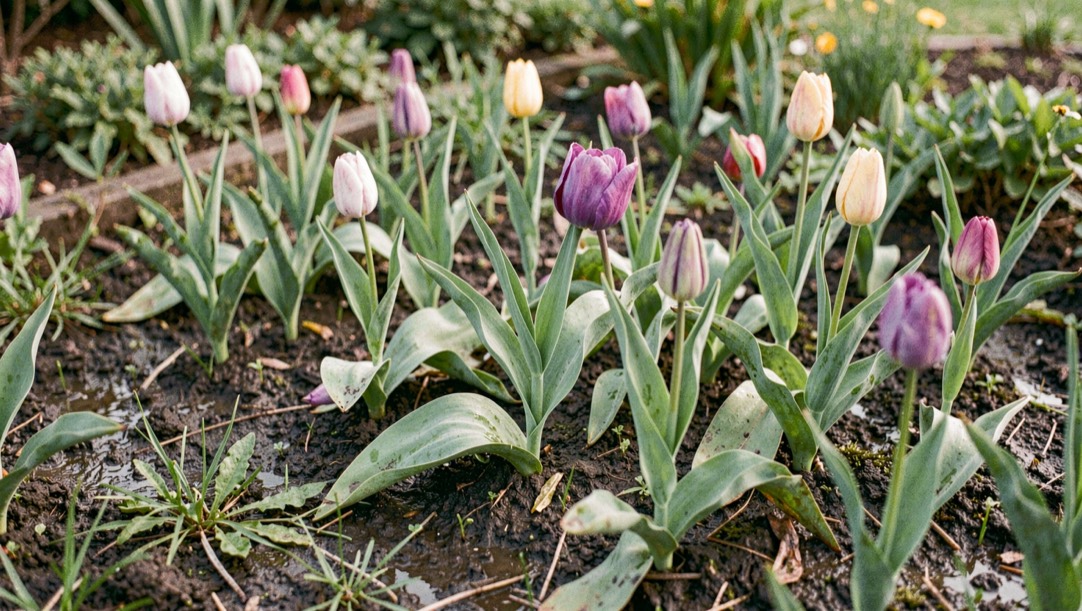
Let the foliage finish
Leaves restore the bulb after flowering. Remove a flower head if seed formation is not wanted, but leave healthy foliage in place until it has yellowed naturally. Tying leaves into tight knots reduces the surface available for that work.
A border can hide the fading leaves with later perennials. In a pot, moving the container out of the centre of attention is often better than cutting the plant early.
Water with the site in mind
Water newly planted bulbs when the soil is dry, then adjust for rain, exposure and the container material. A wet bed is a drainage problem rather than a cue to add more water. A dry spring can shorten the display before the foliage has completed its cycle.
Pair the flowering bands observations with bulb condition when a poor result appears, and keep disease questions separate from normal seasonal decline.
When the second year is different
Some tulips return strongly, while others are grown as a one-season display. The result depends on cultivar, bulb size, summer conditions, soil, drainage and the local climate. A single repeat flowering is not enough to promise perennial performance.
If spots, rot or distorted growth appear, start with the problem guide guide from Iowa State Extension and avoid naming a treatment without a confirmed cause.
Continue the reading
Compare bulb condition, planting guide and growing notes.